

We have been specialising in production photography for theatre and opera for over 20 years.
In that time we have worked with all of Scotland’s leading theatre and opera companies such as Scottish Opera, The National Theatre of Scotland, the Citizens’ Theatre, Edinburgh’s Royal Lyceum, the Traverse and the Tron as well as touring theatre companies such as Rapture and Grid Iron.
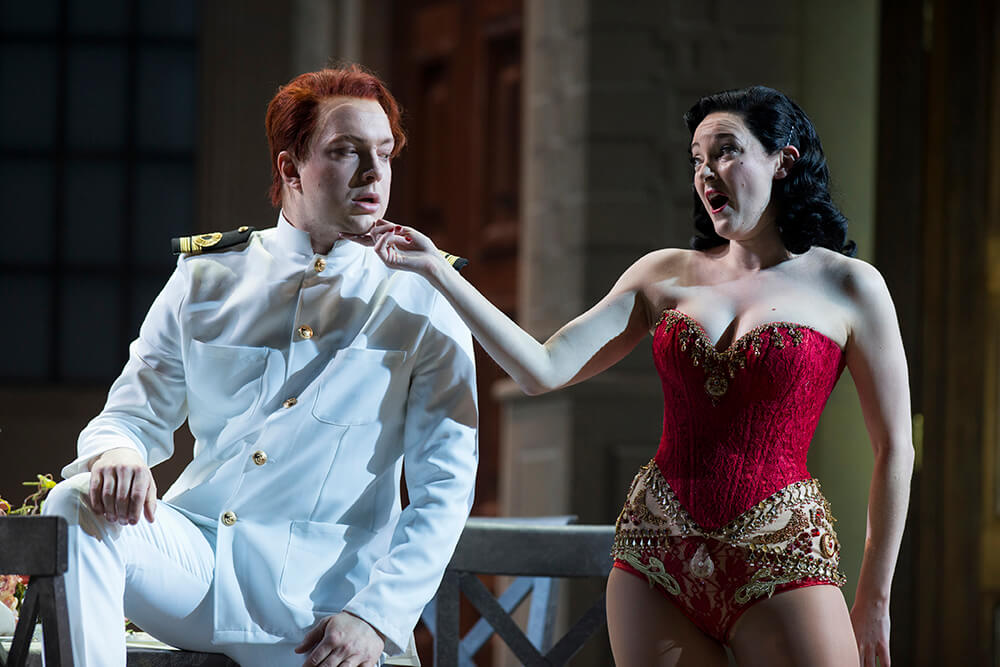
For the past month we have been working with Scottish Opera, providing rehearsal and dress rehearsal photography of their most recent production Ariadne Auf Naxos, which opened at the Theatre Royal in Glasgow before moving onto Edinburgh.

This was a particularly important relationship to capture in the production as the part of the composer is usually a male role.
As theatre and opera photographers, we have vast amount of experience in this very specialised area. I often liken it to other types of specialisms such as wildlife or sports photography. You generally find that good wildlife photographers are naturalists first and photographers second. To be a good sports photographer it helps to have an understanding and appreciation of the sport. Likewise, with theatre and opera photography you need to have a love and appreciation of the medium. It’s not just an exercise in taking PR shots which is how some photographers tend to approach it.
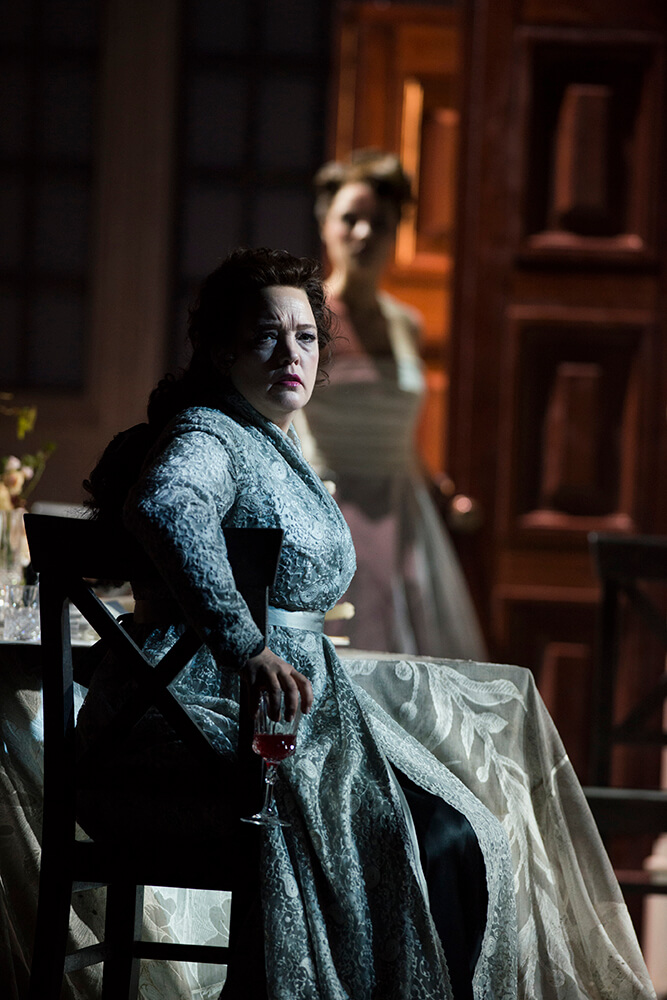
I always like theatre images to tell a story and stand as an image in their own right. Although this is a close up of Mardi Byers I wanted to include the out of focus figure in the background which helps give a sense of the drama unfolding.
I always approach the photography with an understanding of the characters, plot (if there is one), staging and direction. I find this helps inform what you’re shooting and the choices you make, which in turn makes for better images. I like theatre photographs to tell a story, so even if someone hasn’t seen the production or know what it’s about, they’ll at least get a sense of the drama that is being played out. I also like my photographs to stand alone as images in their own right.
In order to help achieve this myself and my colleagues use a variety of lenses. For smaller studio productions, it’s often possible to get in very close and shoot everything with a 24 to 70mm zoom but this isn’t practical in a production such as Scottish Opera’s Aridane Auf Naxos where you are separated from the stage by a large orchestra pit. In order to capture all aspects of this production we actually used 3 different lenses, a 24 to 70mm to capture wider shots of the whole stage, a 70 to 200mm lens to allow us to close in on individuals and smaller groups and a 300mm lens to get close ups of individual performers.
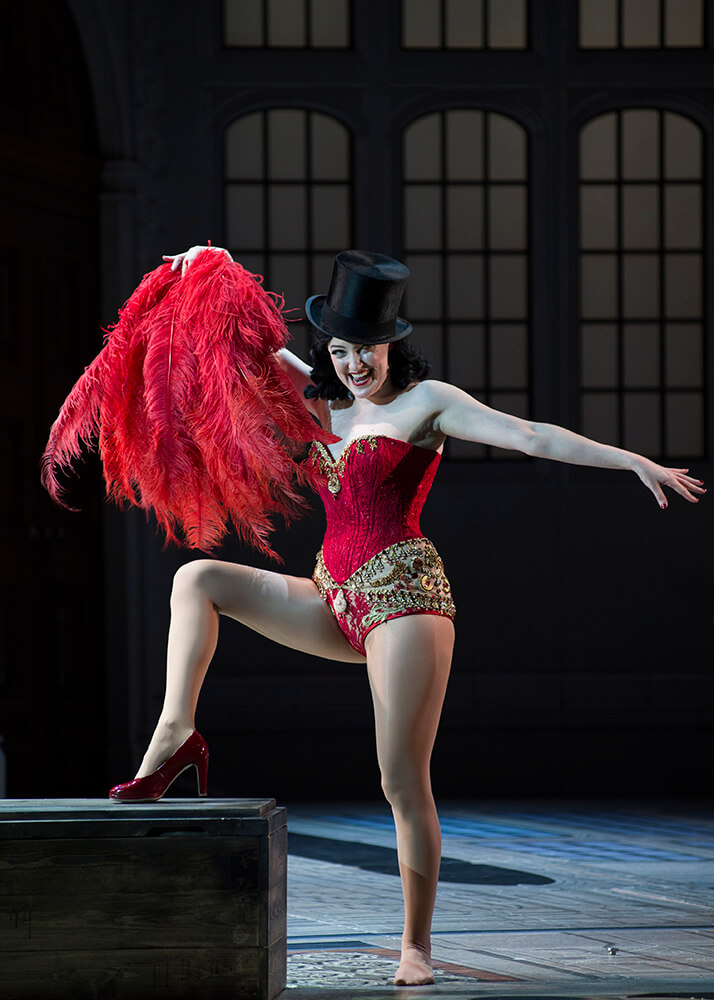
Jennifer France does a wonderful striptease which is full of great poses to capture.
By the time it came to photographing the dress rehearsal ,we’d already photographed floor rehearsals at Scottish Opera’s production centre in Glasgow, so we had a very good understanding of the characters, scenes and direction.
The story of Ariadne Auf Naxos involves two competing sets of performers, one a serious opera company and the other a group of commedia dell’arte players, who are told they must perform together at a music festival rather than as separate groups. This creates numerous moments for comedy and dramatic tension. In order to distinguish the commedia dell’arte players form the opera company, director Antony MacDonald make great use of circus skills which added an interesting visual element to the production. One particularly unusual trick was a hidden leg brace which allowed one character to appear as if he was sitting in an invisible chair.
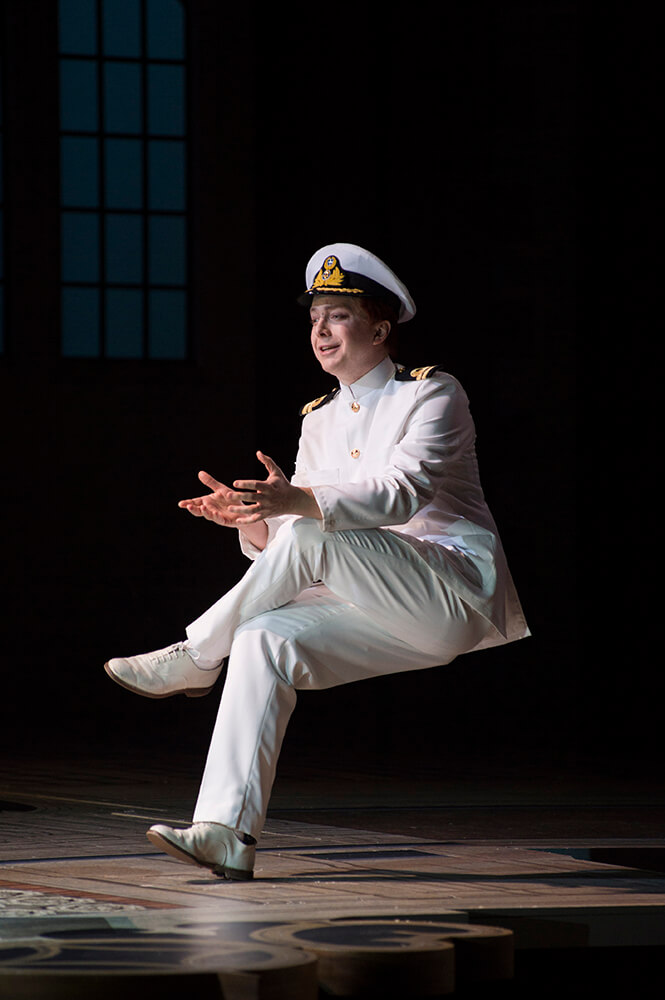
The commedia dell’arte troupe use a number of circus skills but the most interesting trick was hidden leg brace which makes Alex Otterburn look as if he is sitting on an invisible chair.
Another interesting aspect to the production what the decision to have woman singing a man’s part. In the story there was a love interest between this character and another female character so it created created a different dynamic which was important to capture.
Quick turnaround is very important when photographing theatre and opera, as images are required almost immediately for press. Straight after the production we are often up editing late into the night to get images processed in time for the next day. Sometimes we sit down with the press officer immediately after the dress rehearsal to select images if there is an urgent need for images.
If you need professional photographs of your theatre production, opera or performance then we’d be delighted to hear from you. Please call us on 0141 363 0013 or drop us an email.